How to Stop Bedwetting: The Step-by-Step Plan That Works in 3–5 Weeks
The exact week-by-week plan pediatricians recommend to end nighttime bedwetting for good — no pills, no shame, no more 2 AM sheet changes.
Quick answer: the most effective way to stop bedwetting in a child aged 5 or older is a bedwetting alarm used every night for 3–5 weeks. It's the first-line treatment recommended by the American Academy of Pediatrics, it has no side effects, and unlike medication the results usually stick. Everything else in this guide is about doing that well — and knowing what to skip.
If your child is 5+ and still waking up wet, you're not failing them and they're not failing you. Roughly 1 in 6 five-year-olds and 1 in 20 ten-year-olds still wet the bed. It's one of the most common childhood challenges — and one of the most fixable.
Why bedwetting happens (and why it's not your child's fault)
Bedwetting at this age almost always comes down to one thing: the brain-bladder connection hasn't fully matured. While your child is in deep sleep, their brain isn't registering the 'bladder is full' signal. It has nothing to do with laziness, drinking too much water, or how potty training went.
- Deep-sleep arousal — the child sleeps straight through the body's full-bladder signal.
- Smaller functional bladder capacity at night.
- Genetics — if one parent wet the bed, there's roughly a 40% chance their child will too; if both did, about 70%.
For a deeper dive into the biology, read our guide to what causes bedwetting in children.
What works vs. what doesn't: the honest comparison
| Approach | Does it work? | Lasting results? | Downsides |
|---|---|---|---|
| Bedwetting alarm | Yes — 65–80% success | Yes — brain is retrained | Takes 3–5 weeks of consistency; parents wake up too in week 1 |
| Desmopressin (prescription) | Often, while taking it | Usually relapses when stopped | Needs a prescription; strict fluid rules; ongoing cost |
| Lifting to the toilet at night | Fewer wet sheets, sometimes | No — nothing is learned while asleep | You're doing the waking, not their brain |
| Restricting all fluids | Slightly fewer accidents | No | Doesn't address the cause; risks dehydration |
| Pull-ups every night | Contains the mess | No — can delay progress | Ongoing cost; child never feels wet, so nothing changes |
| Waiting it out | Eventually — ~15% resolve per year | Yes, but slowly | Years of laundry, lost sleepovers, and dented confidence |
The method that actually works: bedwetting alarm training
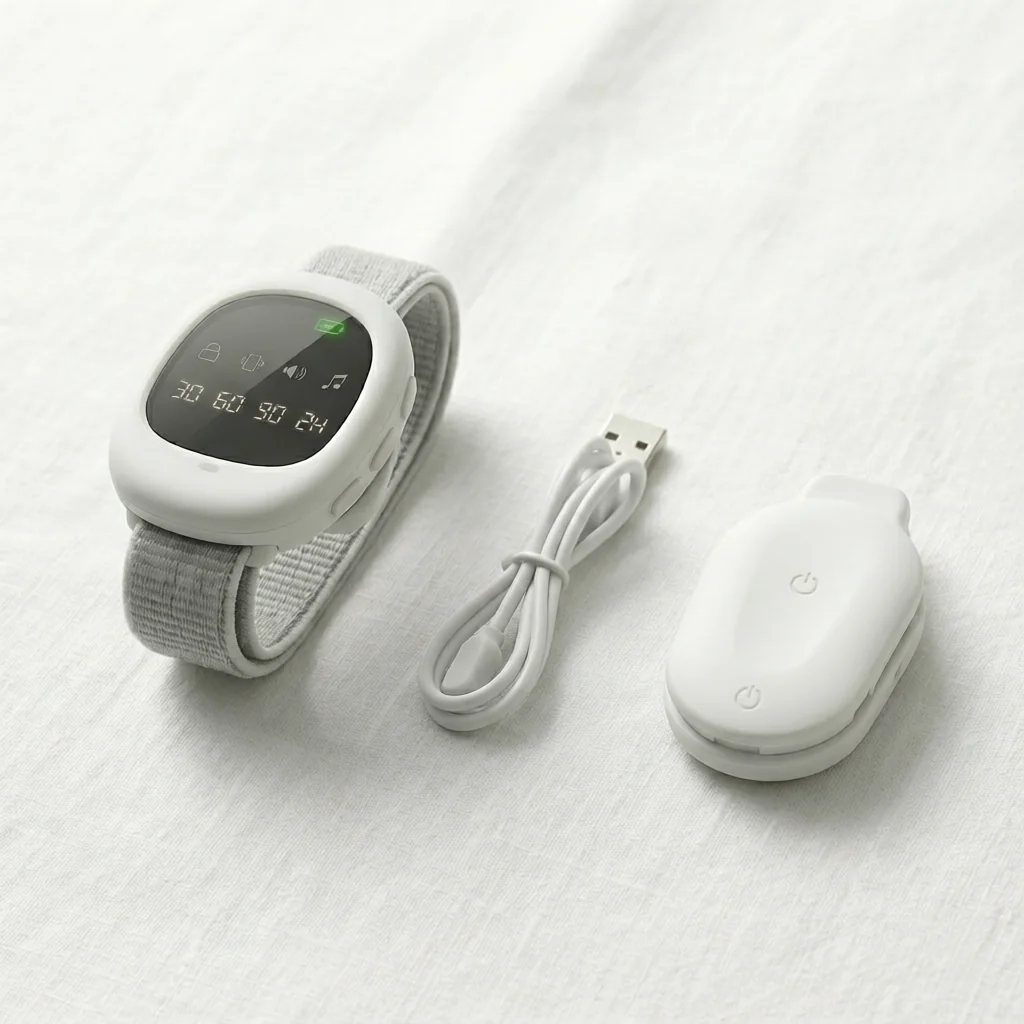
A bedwetting alarm works through Conditioned Response Training: a small moisture sensor detects the very first drop and immediately triggers an alarm. Over a few weeks of nightly repetition, the brain learns to link the full-bladder feeling with waking up — and starts waking your child before the bladder empties.
It isn't magic; it's neuroplasticity. Success rates in clinical studies range from 65% to 80%, and because the brain has genuinely learned something new, relapse rates are far lower than with medication.
The 5-week plan, night by night
| Week | What you'll see | What to do |
|---|---|---|
| Week 1 | Alarm fires, child sleeps through it. You wake first. | Walk them calmly to the bathroom every single time. Zero drama. Set the alarm loud with vibration on. |
| Week 2 | Wet patches get smaller. Child starts stirring when the alarm goes. | Keep it 100% consistent — even weekends and sleepovers at grandma's. |
| Week 3 | First fully dry nights. Child sometimes wakes on their own before the alarm. | Celebrate dry nights lightly; never make wet nights a big deal. |
| Week 4 | Dry nights become the majority. | Keep using the alarm every night — this is where the habit locks in. |
| Week 5+ | 14 consecutive dry nights — the clinical marker for success. | Continue 2 more weeks to reinforce, then stop. Restart briefly if a relapse happens. |
The single biggest predictor of success isn't the brand of alarm — it's whether your child wears it every night for at least 14 nights before anyone decides it 'isn't working.'
Tips that make the process easier
- Use a waterproof mattress protector so wet nights are a 2-minute job, not a 20-minute one.
- Let your child help change the sheets — as teamwork, not punishment.
- Keep evening fluids reasonable (not zero) and have them pee right before bed.
- Skip pull-ups during training. Feeling wet is part of how the brain learns.
- Check for constipation — a full bowel presses on the bladder and is a surprisingly common hidden cause.
- Pick an alarm your child doesn't mind wearing. A wireless watch-style receiver beats a wired shoulder box for compliance.
When to talk to your pediatrician
Bedwetting alone is rarely a sign of something serious. Do check in with your doctor if your child started wetting again after 6+ dry months, has painful or urgent urination during the day, snores heavily (sleep apnea can cause bedwetting), is unusually thirsty, or is constipated.
Frequently asked questions
What is the fastest way to stop bedwetting?
For children 5 and older, a bedwetting alarm used consistently every night is the fastest method with lasting results — most families see consistent dry nights within 3–5 weeks. Medication can work faster on a given night, but bedwetting usually returns when it's stopped.
At what age should I start treating bedwetting?
Pediatric guidelines consider treatment appropriate from age 5, especially if the child wets 2+ nights a week and either the child or the parents are bothered by it. There's no benefit to waiting if it's affecting confidence or sleep.
Should I wake my child up to pee at night?
Lifting a sleeping child to the toilet reduces wet sheets that night but doesn't teach the brain anything, so it doesn't shorten bedwetting. An alarm wakes the child at the exact moment the bladder releases, which is what creates the learned response.
How long does bedwetting alarm training take?
Typically 3–5 weeks to reach 14 consecutive dry nights, then 2 more weeks of use to reinforce. Some children take up to 8–12 weeks. Give it at least 14 nights of consistent use before judging.
Do bedwetting alarms work for deep sleepers?
Yes — deep sleep is the main reason most kids wet the bed, and alarms are designed for it. In week 1 the parent usually wakes first and helps the child up; within a couple of weeks most children begin responding to the alarm themselves. Choose a model with both loud sound and vibration.
Do pull-ups make bedwetting last longer?
They can. Pull-ups keep the child from feeling wet, so the brain gets no signal to learn from. They're fine for trips or sleepovers, but during alarm training use regular underwear so the sensor and the wet feeling can do their job.
What is the 14-night rule for bedwetting?
Fourteen consecutive dry nights is the clinical marker that alarm training has worked. Keep using the alarm for about 2 more weeks after reaching it to lock the habit in, then stop.
The bottom line
Bedwetting is a developmental stage, not a character flaw — and you don't have to wait years for it to pass. A bedwetting alarm is the single most effective tool to move through it, and the right one — wireless, comfortable, loud enough for a deep sleeper — makes the difference between quitting in week 1 and celebrating in week 4. Ready when you are: see how the LyleCare Bedtime Kit works.
LyleCare Bedtime Kit — wireless bedwetting alarm for kids 5+